
 sale@henanminecranes.com
  +86 16627702870

Introduction
In the world of industrial material handling, efficiency and precision are paramount. Among the most innovative solutions to emerge in recent years is the rotary overhead crane — a specialized lifting system that combines the strength of traditional overhead cranes with the flexibility of full rotational movement.
Unlike standard bridge cranes that move loads linearly along fixed axes, a rotary overhead crane incorporates a rotating mechanism, allowing the hoist to pivot 180° or even 360° around a central mast or column. This unique capability makes it indispensable for workshops, assembly lines, and confined spaces where loads need to be positioned from multiple angles without relocating the entire crane structure.
In this comprehensive guide, we will explore everything you need to know about rotary overhead cranes: how they work, their key benefits, common applications, selection criteria, maintenance best practices, and how they compare to other crane types.
What Is a Rotary Overhead Crane?
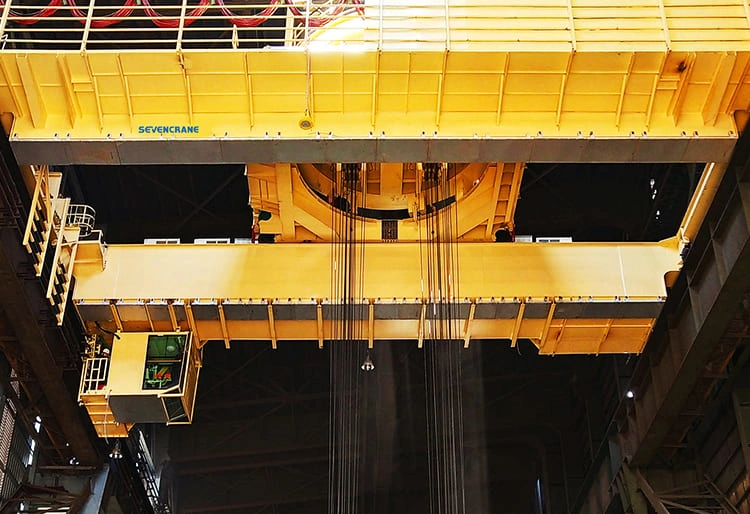
A rotary overhead crane (also known as a slewing jib crane or rotating bridge crane) is a type of lifting equipment where the bridge or boom can rotate around a vertical axis. The rotation is typically achieved through a slewing bearing, electric motor, or manual gear mechanism, depending on the model and capacity.
The crane consists of several core components:
Central mast or column – Anchored to the floor or ceiling.
Rotating bridge/boom – Extends horizontally and supports the hoist.
Slewing unit – Enables smooth rotation.
Hoist and trolley – Lifts and moves loads along the boom.
Control system – Wired pendant, radio remote, or automated controls.
This design allows the operator to pick up a load from one point, rotate it to a different angular position, and lower it precisely — all without repositioning the crane base.
How Does a Rotary Overhead Crane Work?
The operation of a rotary overhead crane follows a simple yet effective principle:
Lifting – The hoist (electric chain hoist or wire rope hoist) raises the load vertically.
Travel along boom – The trolley moves the load horizontally across the boom’s length.
Rotation – The entire boom rotates around the mast, covering a circular or semi-circular work area.
The rotation can be:
Manual – For light-duty cranes, the operator pulls the load or boom by hand.
Electric – A motor drives the slewing unit for heavy or frequent lifts.
Pneumatic – For explosive environments (e.g., chemical plants).
Key Types of Rotary Overhead Cranes
| Type | Description | Best For |
|---|---|---|
| Freestanding Rotary Crane | Mounted on a floor-standing column; requires a reinforced concrete foundation. | High capacities, open floor plans. |
| Wall-Mounted Rotary Crane | Boom attached to a wall bracket; saves floor space. | Narrow aisles, workstations along walls. |
| Ceiling-Mounted Rotary Crane | Suspended from overhead roof structure; ideal for low-headroom areas. | Facilities with limited floor space but strong ceiling support. |
| Portable Rotary Crane | Mounted on wheels or a mobile base. | Temporary lifting tasks, maintenance depots. |
Advantages of Using a Rotary Overhead Crane
Why invest in a rotary overhead crane instead of a conventional bridge crane or forklift? Here are the compelling benefits:
1. 360° Coverage (or 180°+)
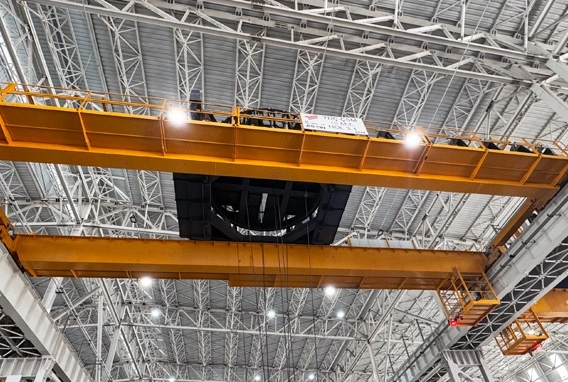
The ability to rotate loads around a fixed point eliminates dead zones and allows one crane to serve multiple workstations.
2. Space Efficiency
No need for long runways or aisle space. A single column takes up minimal floor area while covering a large circular radius.
3. Precision Positioning
Operators can fine-tune load placement by combining boom rotation and trolley movement, reducing product damage and improving assembly accuracy.
4. Reduced Material Handling Time
Lifting and rotating in one continuous motion cuts cycle times compared to using forklifts or multiple cranes.
5. Lower Installation Cost
Compared to a full bridge crane system, rotary cranes are simpler to install and require less structural modification.
6. Ergonomic Safety
Manual rotation models reduce pushing/pulling strain. Electric rotation eliminates manual effort entirely.
Common Applications and Industries
| Industry | Application Example |
|---|---|
| Automotive | Lifting engines onto assembly stands, rotating car bodies during painting. |
| Machining & Fabrication | Loading/unloading CNC machines, positioning heavy workpieces for welding. |
| Warehousing & Logistics | Moving pallets in narrow aisles, loading trucks at dock doors. |
| Aerospace | Maneuvering turbine blades or fuselage sections in restricted spaces. |
| Chemical & Pharmaceutical | (Pneumatic models) handling drums without spark risks. |
| Maintenance Workshops | Lifting motors, gearboxes, and pumps from machinery for repair. |
| Construction (indoor) | Placing precast concrete elements or steel beams. |
How to Choose the Right Rotary Overhead Crane: 7 Critical Factors
Selecting the optimal crane requires evaluating your operational needs. Ask these questions:
1. What is the maximum load weight?
Always choose a crane with a capacity 20–25% above your heaviest expected load to account for dynamic forces.
2. What is the required radius (boom length)?
Measure from the mast center to the farthest pick/drop point. Longer booms reduce capacity due to increased bending moment.
3. Rotation angle needed?
Full 360° requires slip rings for power; 180° is simpler and cheaper. Some facilities only need 90°.
4. Manual, electric, or pneumatic rotation?
Manual: economical, but limited to ≤1 ton and occasional use.
Electric: best for frequent, heavy loads.
Pneumatic: mandatory for hazardous environments (ATEX zones).
5. Mounting style
Freestanding requires foundation work. Wall/ceiling mounted may need structural assessment.
6. Headroom availability
Low-ceiling facilities may need a low-headroom hoist or a custom short mast.
7. Duty cycle classification
ISO/FEM ratings (e.g., 1Am, 2m, 3m) indicate how many lifts per hour and per year the crane can handle. Match to your workload.
Installation & Safety Considerations
Proper installation is non-negotiable for safe operation. Key steps include:
Foundation design – For freestanding models, a concrete base must resist overturning moment. Soil bearing capacity must be verified.
Anchoring – Use high-strength chemical or mechanical anchors.
Electrical connection – Ensure correct voltage, phase, and grounding. Slip rings required for 360° rotation.
Load testing – Conduct a static test at 125% of rated capacity and a dynamic test at 100% before commissioning.
Rotary Overhead Crane vs. Other Crane Types
| Crane Type | Best Feature | Limitation |
|---|---|---|
| Rotary Overhead Crane | 360° rotation, small footprint | Limited to one circular zone |
| Bridge Crane (EOT) | Covers large rectangular areas | High cost, complex runway |
| Gantry Crane | Portable, no ceiling needed | Requires floor space, legs obstruct |
| Standard Jib Crane | Simple, cheap | Usually fixed boom, no full rotation |
| Forklift | Mobile, versatile | Requires operator to drive, less precise |
Conclusion: Is a Rotary Overhead Crane Right for You?
The rotary overhead crane is not just a piece of machinery — it is a productivity multiplier. For workshops, assembly cells, or warehouses that need flexible, space-saving, and precise lifting over a defined circular area, this crane delivers unmatched value.
By understanding the types, benefits, selection criteria, and maintenance needs outlined in this guide, you can make an informed investment that will pay dividends in safety, efficiency, and reduced labor costs for years to come.
Ready to upgrade your material handling? Start by calculating your maximum load, radius, and duty cycle, then consult a certified crane supplier for a tailored solution.
Henan Mining Cranes Co., Ltd. is a leading crane manufacturer in China. With decades of industry experience, we have become a trusted partner in the global material handling solution field. We are committed to providing comprehensive professional services tailored to your specific needs. We recommend the most suitable crane products, offer accurate quotations, and design customized solutions. Welcome to contact us.
Get In Touch
Email: sale@henanminecranes.com
Website: https://henanminecrane.com/
Whatsapp:16627702870