
 sale@henanminecranes.com
  +86 16627702870

In the world of material handling and overhead lifting, few pieces of equipment are as essential and versatile as the wire rope electric hoist. From manufacturing plants and construction sites to warehouses and shipyards, these hoists provide the strength, precision, and reliability needed to move heavy loads safely and efficiently.
If you are considering upgrading your lifting equipment or selecting a hoist for a new project, understanding the features, benefits, and key selection criteria of wire rope electric hoists will help you make an informed decision. This comprehensive guide covers everything you need to know.
What Is a Wire Rope Electric Hoist?
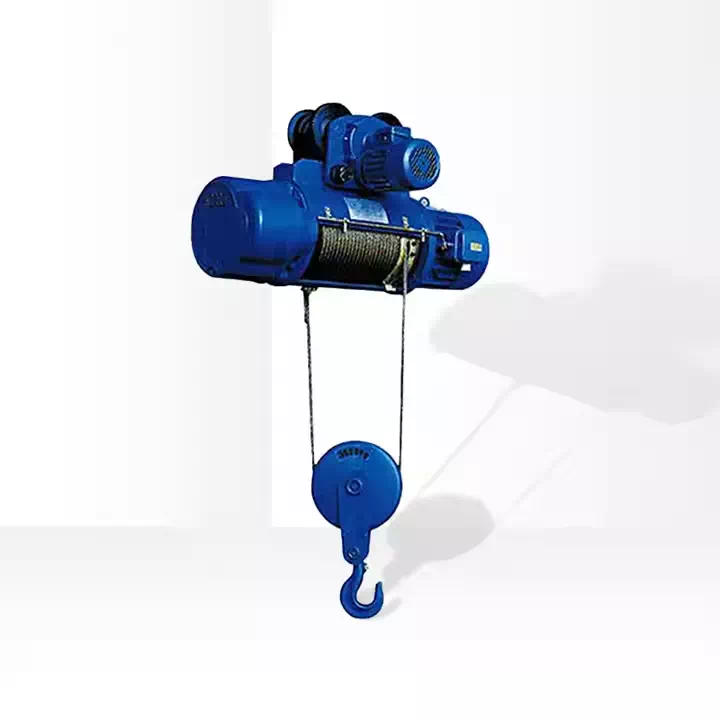
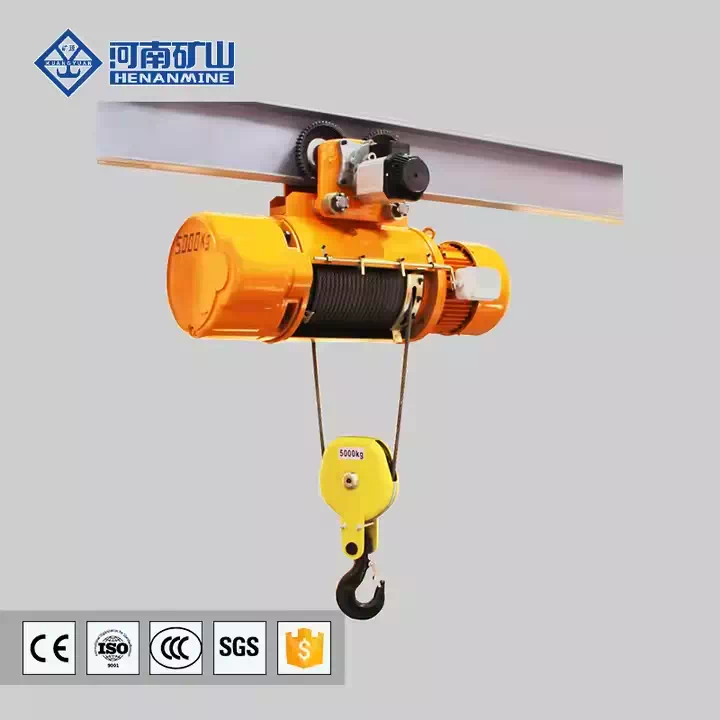
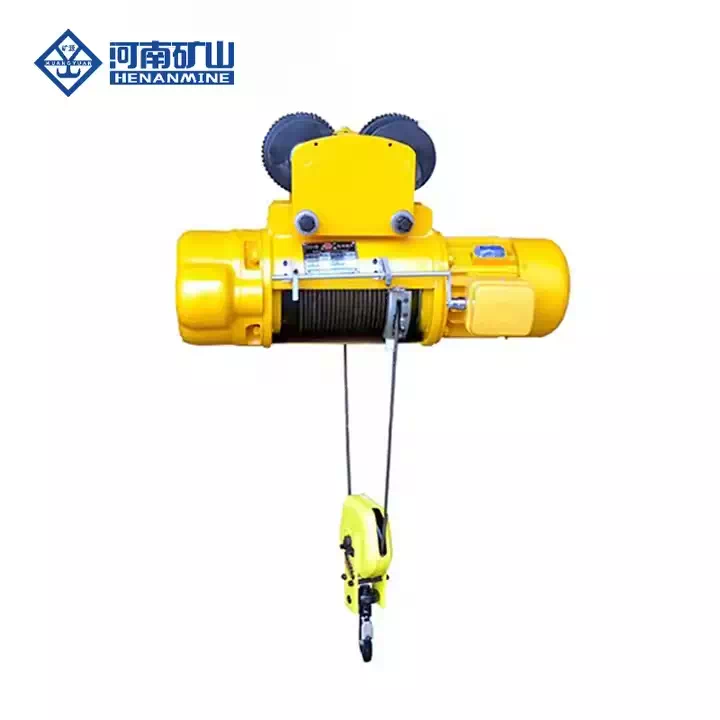
A wire rope electric hoist is a lifting device that uses a wire rope (as opposed to a chain) as its lifting medium and is powered by an electric motor. It typically consists of a motor, gearbox, drum, wire rope, hook, and control system. The hoist lifts, lowers, and moves loads horizontally (when mounted on a trolley) along an overhead beam or gantry crane.
Wire Rope vs. Chain Hoists: Key Differences
When choosing an electric hoist, one of the first decisions is whether to select a wire rope or chain model. Here is how they compare:
| Feature | Wire Rope Electric Hoist | Electric Chain Hoist |
|---|---|---|
| Lifting Capacity | Typically 1 ton to over 100 tons | Typically up to 20 tons |
| Lift Height | Can exceed 100 meters; suitable for high-lift applications | Limited by chain length; typically under 30 meters |
| Duty Cycle | High (continuous operation, FEM/ISO classifications) | Moderate to heavy |
| Speed | Multiple speeds (variable frequency drive optional) | Usually single or dual speed |
| Durability | Excellent in harsh conditions; wire rope is abrasion-resistant | Good for light to medium duty |
| Cost | Higher initial investment | Lower initial cost |
Key Components of a Wire Rope Electric Hoist
Understanding the main components helps in both selection and maintenance:
Electric Motor: Typically a squirrel-cage induction motor designed for high starting torque and frequent starts/stops. Motors can be single-speed, two-speed, or equipped with variable frequency drives (VFD) for precise load control.
Gearbox: A precision-machined gear train that transmits power from the motor to the drum. Helical or planetary gears are common for smooth, quiet operation.
Drum: The cylindrical component on which the wire rope winds. It is grooved to ensure even rope layering and reduce wear.
Wire Rope: Made of high-strength steel strands. The rope’s construction (e.g., 6x36 or 8x19) influences flexibility, abrasion resistance, and fatigue life.
Hook: Typically equipped with a safety latch. Hooks are often swivel-mounted to prevent twisting.
Trolley: Allows the hoist to traverse along an I-beam or box girder. Trolleys can be manual, motorized, or geared.
Control System: Pendant station, radio remote control, or cab operation. Modern hoists often feature overload protection, emergency stop, and anti-two-block devices.
Types of Wire Rope Electric Hoists
Depending on the mounting configuration, wire rope electric hoists fall into several categories:
1. Lug-Mounted Hoists
Fixed hoists that are mounted directly to a stationary structure or a trolley. They are compact and ideal for applications where only vertical lifting is required without cross-travel.
2. Hook-Mounted Hoists
These hoists have a top hook and can be suspended from a trolley or beam. They offer flexibility and are easy to relocate.
3. Trolley-Mounted Hoists
The hoist is integrated with a motorized or manual trolley, allowing both lifting and horizontal movement. This is the most common configuration for overhead cranes.
4. Low-Headroom Hoists
Designed for areas with limited vertical space. The hoist is arranged to minimize the distance between the hook and the beam, maximizing usable lift height.
Key Selection Criteria
Choosing the right wire rope electric hoist requires careful evaluation of operational needs. Consider the following factors:
1. Lifting Capacity
Determine the maximum weight to be lifted, including the rigging. Always select a hoist with a capacity that exceeds the maximum load by a reasonable safety margin.
2. Lift Height
Measure the distance from the floor to the highest point of lift. For high-rise applications or deep-well lifting, ensure the hoist’s drum can accommodate the required rope length.
3. Speed Requirements
Lifting speed affects productivity. For precise positioning, a two-speed or VFD-controlled hoist offers better control. High-speed hoists are beneficial for repetitive lifts over long distances.
4. Environmental Conditions
Consider factors such as ambient temperature, dust, humidity, corrosive atmospheres, or explosion risks. Explosion-proof hoists are available for hazardous locations (e.g., chemical plants, grain elevators).
5. Power Supply
Verify voltage, phase, and frequency compatibility. Most industrial hoists operate on 230V, 460V, or higher three-phase power.
Benefits of Wire Rope Electric Hoists
Wire rope electric hoists offer several advantages over alternative lifting methods:
High Strength-to-Weight Ratio: Wire rope provides exceptional tensile strength without excessive bulk.
Long Service Life: With proper maintenance, wire rope and mechanical components withstand years of heavy use.
Smooth Operation: The flexibility of wire rope reduces shock loads and provides a smoother ride for the load.
Precision Control: Electric operation enables variable speeds, soft starts, and accurate positioning.
Space Efficiency: Compact design allows installation in facilities with limited headroom or tight layouts.
Safety Features: Modern hoists include overload limiters, emergency brakes, upper/lower limit switches, and rope guides to prevent accidents.
Safety Considerations
Safety is paramount when operating any lifting equipment. Follow these best practices:
Pre-Operation Inspection: Check wire rope for broken wires, kinks, or corrosion. Inspect hooks for deformation, and verify that limit switches function correctly.
Never Exceed Rated Capacity: Overloading is a leading cause of hoist failure.
Use Proper Rigging: Ensure slings, shackles, and lifting attachments are in good condition and rated for the load.
Avoid Side Pulling: Pulling at an angle can damage the wire rope and cause the trolley to derail.
Train Operators: All personnel should be trained in safe hoist operation, including hand signals and emergency procedures.
Adhere to Maintenance Schedules: Follow manufacturer recommendations for lubrication, inspection, and replacement of worn components.
Installation and Maintenance Tips
Installation
Ensure the supporting beam or crane structure is rated for the combined weight of the hoist and the maximum load.
Verify electrical connections are made by a qualified electrician.
Test all functions (hoist up/down, trolley travel) without load before commissioning.
Maintenance
Lubrication: Keep the wire rope, gears, and bearings properly lubricated according to the manual.
Wire Rope Replacement: Replace the wire rope when signs of wear exceed allowable limits (e.g., broken wires, diameter reduction, birdcaging).
Brake Inspection: Check motor brake regularly for wear and adjust as needed.
Electrical Components: Inspect contacts, relays, and pendant cables for damage.
Documentation: Maintain a log of inspections, repairs, and replacements.
Common Applications
Wire rope electric hoists are found in a wide range of industries:
Manufacturing: Assembly lines, machine shops, and foundries.
Construction: Lifting steel beams, precast concrete, and construction materials.
Warehousing & Logistics: Heavy goods movement in distribution centers.
Power Generation: Turbine maintenance and component handling.
Shipbuilding: Lifting large sections and equipment in dry docks.
Mining & Quarrying: Heavy-duty hoists for maintenance and material handling.
Emerging Trends in Wire Rope Electric Hoists
Modern hoists are incorporating advanced technologies to improve safety, efficiency, and connectivity:
Variable Frequency Drives (VFD): Enable stepless speed control, smooth acceleration, and reduced mechanical stress.
Smart Hoists: IoT-enabled hoists provide real-time data on usage, maintenance alerts, and performance analytics.
Energy Efficiency: Regenerative braking systems capture energy during lowering, reducing overall power consumption.
Radio Remote Control: Enhances operator safety by allowing control from a safe distance, eliminating pendant cable hazards.
Conclusion
The wire rope electric hoist remains an indispensable tool for heavy lifting across virtually every industrial sector. Its robust construction, high lifting capacities, and adaptability make it the preferred choice for demanding applications where safety and reliability cannot be compromised.When selecting a hoist, evaluate your load requirements, duty cycle, environmental conditions, and desired control features. Partner with a reputable manufacturer or supplier who can provide technical support, spare parts, and after-sales service.
Henan Mining Cranes Co., Ltd. is a leading crane manufacturer in China. With decades of industry experience, we have become a trusted partner in the global material handling solution field. We are committed to providing comprehensive professional services tailored to your specific needs. We recommend the most suitable crane products, offer accurate quotations, and design customized solutions. Welcome to contact us.
Get In Touch
Email: sale@henanminecranes.com
Website: https://henanminecrane.com/
Whatsapp:16627702870